
Plastering and Rendering Services in High Wycombe
Plastering, skimming, plasterboarding, rendering, pebble dashing, repairs, screeding and damp proofing for homes and businesses in High Wycombe and the surrounding area.
High Wycombe plastering services
- Plastering
- Skimming
- Plasterboarding
- Rendering
- Pebble dashing
- Repairs
Plastering services from a local plasterer
DC Jones Plastering covers all aspects of plastering, inside and outside the house. Every service below is one we offer, and every photo is one of our own jobs around High Wycombe.
Each section explains what the work involves and what to look out for. If your job is not listed, or you are not sure what it needs, call 07464 735009 or send the form and describe it.
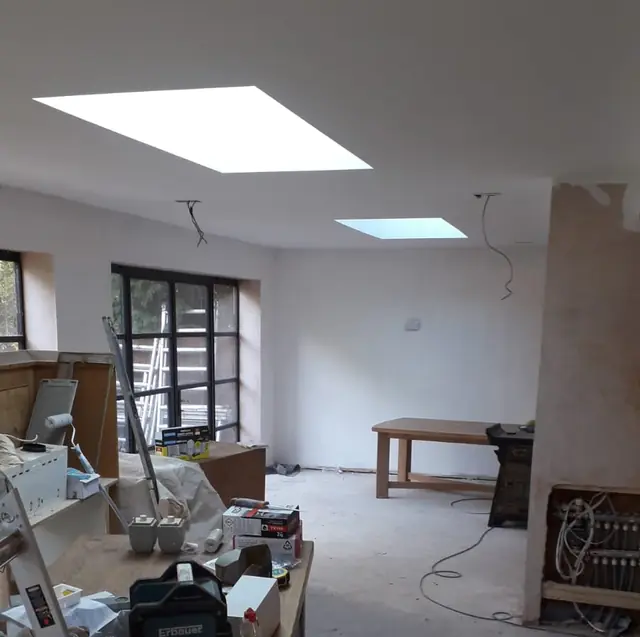
Plastering and skimming in High Wycombe
Skimming is the thin finishing coat that gives a wall or ceiling its smooth surface, ready for decorating. It is usually around 2 to 3mm thick and goes on in two coats. A re-skim over sound old plaster is often all a tired room needs, and it is the usual way to cover an Artex ceiling.
Where a wall is new, or has been stripped back to the brick or block, it needs a base coat first. That is floating: a coat of sand and cement, Hardwall or Browning that straightens the wall, followed by the finishing coat. Floating and setting is how most extension and renovation walls are plastered.
Plastering work
- Skimming walls and ceilings
- Re-skimming over old plaster
- Plastering over Artex
- Float and set on brick and blockwork
- Interior plastering for homes and businesses
Before we start
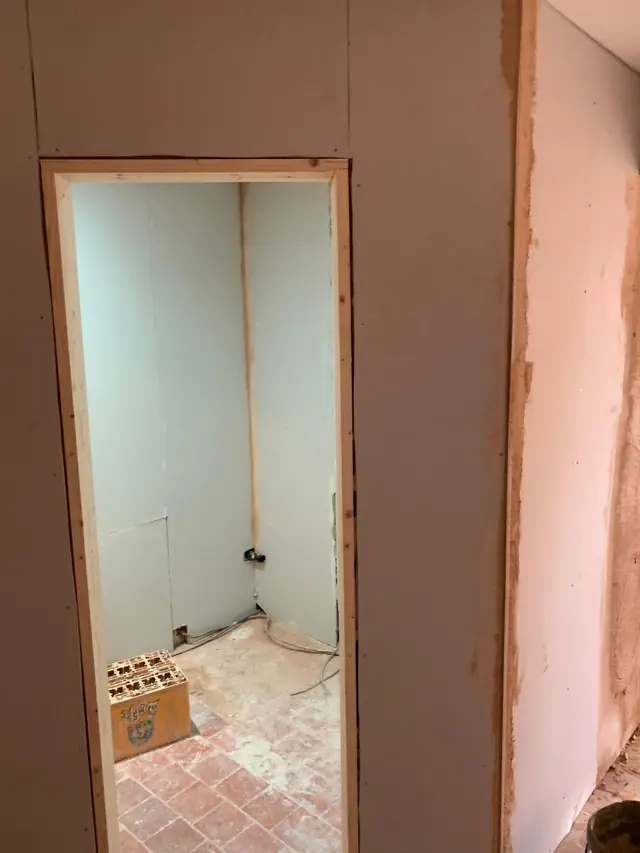
Plasterboarding and dry lining
Plasterboard is a clean, simple way to get a flat wall or ceiling. On brick and block walls the boards are often fixed by dot and dab: dabs of adhesive on the wall, with each board pressed on and lined up straight. Ceilings and stud walls are boarded by fixing the sheets to the timbers or the metal framing.
Once the boards are up, the joints are taped and the whole surface is skimmed, so the finished wall looks like any other plastered wall. Metal lath is used where plaster needs something to grip, such as over timber or where different materials meet.
Boarding work
- Dot and dab plasterboard on walls
- Ceilings boarded and skimmed
- Dry lining
- Stud walls boarded
- Metal lath and wire meshing
Where it is used
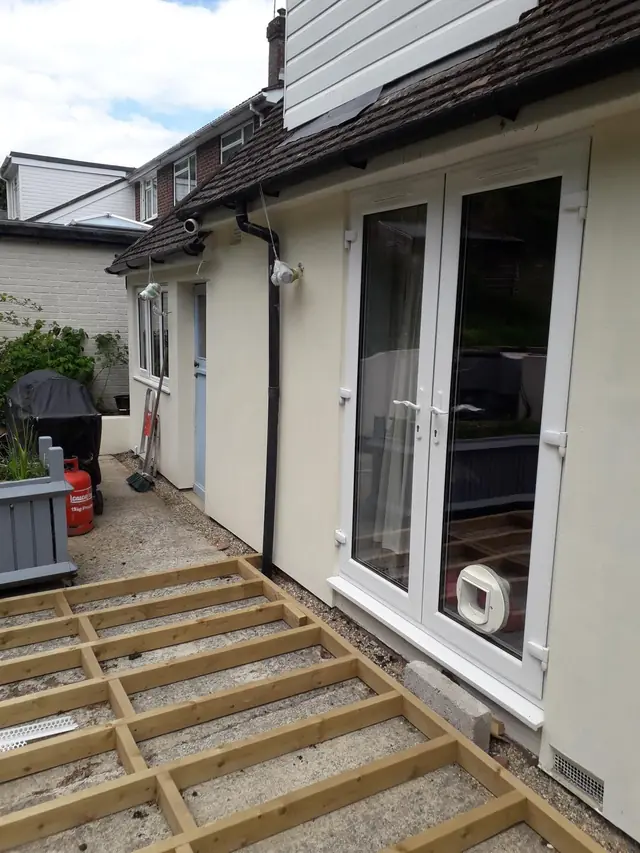
Rendering in High Wycombe
Render is plaster for the outside of a building. It protects the brick or block underneath from the weather and gives the house a clean, even face. Traditional sand and cement render goes on in coats, starting with a scratch coat that is scored so the next coat grips, and it is usually painted once it has dried.
Through-coloured renders such as K Rend and monocouche come ready-coloured, so they do not need painting. They go on in thicker coats and are scraped or textured to finish. Which render suits a house depends on the walls underneath, the look you want and how much upkeep you want later.
Rendering work
- Sand and cement render
- K Rend through-coloured render
- Monocouche render
- Scratch coats and base coats
- Exterior plastering on houses and extensions
Choosing a render
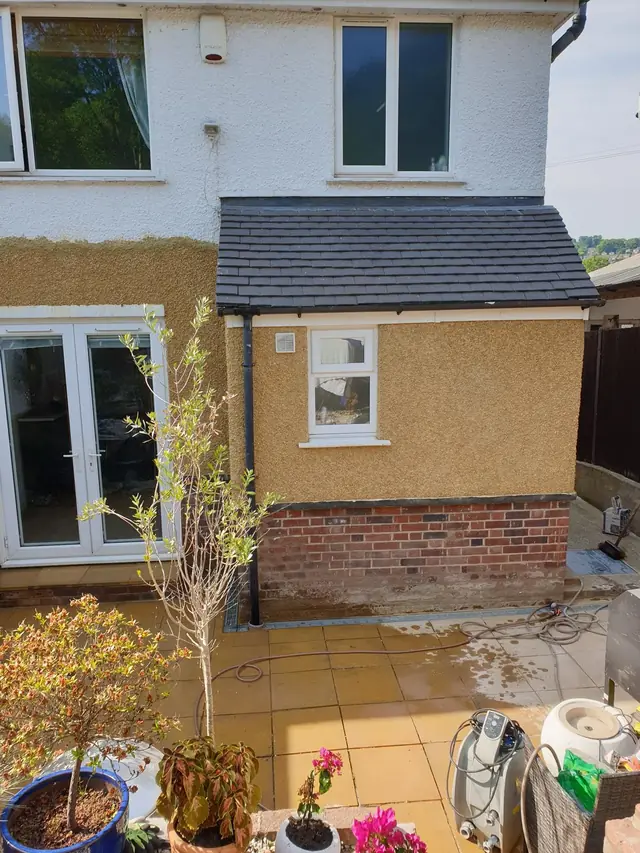
Pebble dashing and Tyrolean finishes
Pebble dash is a hard-wearing finish for outside walls. A sand and cement scratch coat goes on first, then a top coat, and while that coat is still wet, small stones are thrown at it so they bed into the surface. Spar dash and Canterbury dash use different stones, for a different colour and texture.
Old pebble dash can come away in patches when the render behind it fails. Small areas can be patched, but new stone rarely matches old dash exactly, so a whole wall is sometimes redone to keep it even. Tyrolean is a different textured finish, flicked onto the wall by a hand-turned machine.
Dashing and textured finishes
- Pebble dashing
- Spar dashing
- Canterbury dashing
- Tyrolean finishes
- Pebble dash repairs
Good to know

Plaster repairs and coving
Not every job needs a whole room re-plastered. Cracks, blown plaster that sounds hollow when tapped, damage left by a leak and the gaps around a new window or door can all be cut back and patched, then finished so the repair blends into the wall around it.
Ceilings get the same treatment. A cracked or sagging ceiling can sometimes be repaired, and sometimes it is better boarded and skimmed. Coving finishes the line where the wall meets the ceiling and can hide small cracks along it.
Repair work
- Patch repairs to walls and ceilings
- Blown plaster cut out and replaced
- Making good around new windows and doors
- Ceiling repairs
- Coving
Signs plaster needs repair
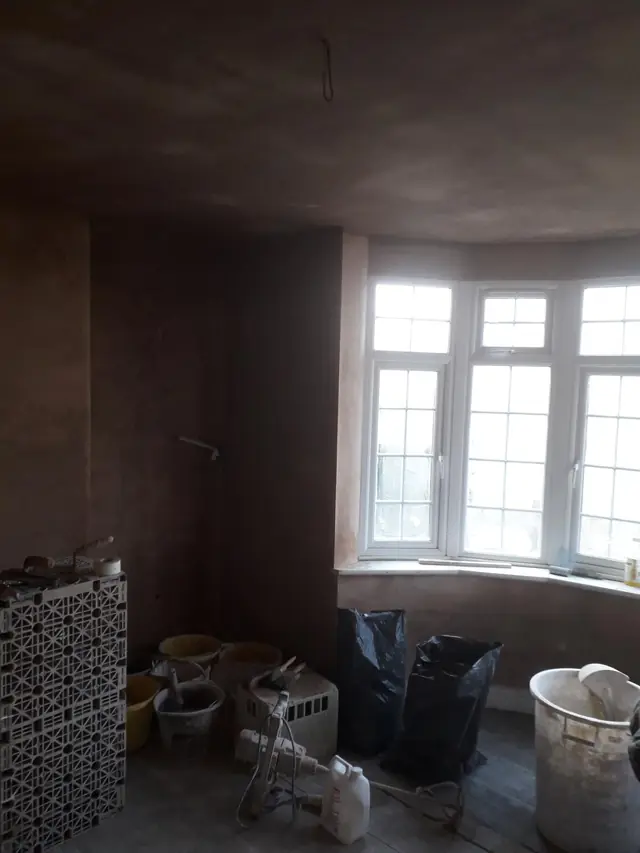
Screeding, damp proofing and renovation
Older houses often need more than a skim. Walls that have been hacked back after damp treatment have to be plastered again with materials that suit them, and the solid walls of many older buildings are better plastered in lime, which lets moisture out of the wall instead of trapping it.
Screeding is the sand and cement layer laid over a concrete floor to give a level surface for the final floor. It is a common part of extensions and renovations, along with plastering the rooms once the building work is done.
Renovation work
- Floor screeding
- Damp proofing
- Plastering after damp treatment
- Lime plastering
- Renovation plastering
Good to know
Tell us about your plastering job
Say what needs plastering or rendering and where the property is, and we will get back to you to arrange a free estimate.
07464 735009- daltonjones747@gmail.com
- Photos of the walls or ceilings are welcome by email
- Covering High Wycombe and the surrounding area